Anyone planning their first conference in Las Vegas eventually runs into the same booking confusion: a venue asks whether the event needs an interpreter or a translator, and the two words get used interchangeably right up until the wrong professional shows up on the day. Interpreter vs translator isn't a pedantic distinction. It determines who you hire, what equipment you rent, and whether your international attendees actually follow the keynote.
The Short Answer
A translator works with written text: contracts, slide decks, signage, exhibitor materials. An interpreter works with spoken language in real time, converting what a speaker says into another language as the audience listens. The skill sets overlap less than people assume. A brilliant technical translator may never have interpreted live, and a seasoned interpreter may take far longer to produce a polished written translation than a dedicated translator would. Booking one when you need the other is the single most common mistake first-time event organizers make.
What the Interpretation Definition Misses in Practice
The dictionary interpretation definition, rendering spoken language from one tongue into another, doesn't capture how physically demanding the job is. A skilled interpreter is processing incoming speech, holding it in short-term memory, restructuring it grammatically for the target language, and speaking, all within a second or two of the original. For a full conference day, agencies typically staff two interpreters per language pair so they can trade off every twenty to thirty minutes, since sustained cognitive load at that level degrades accuracy fast. Professional standards for this kind of rotation and booth staffing are documented by bodies like the International Association of Conference Interpreters, which most reputable agencies use as a baseline when quoting a job.
Simultaneous Interpretation vs Consecutive Interpretation
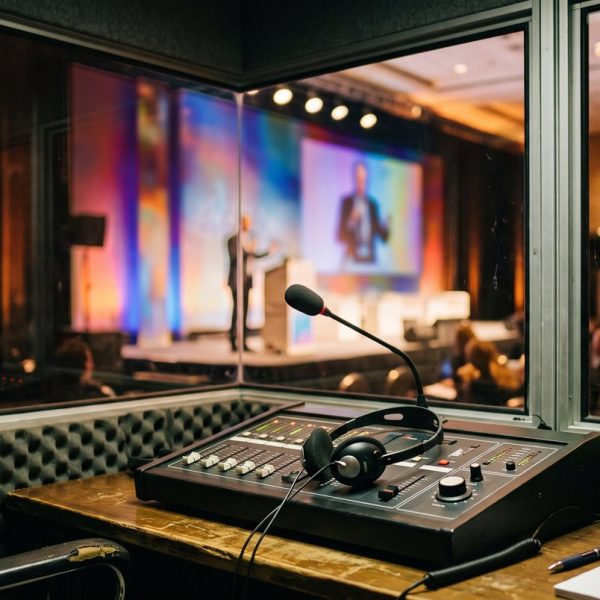
Simultaneous interpretation happens in real time, usually from a soundproof booth, with the interpreter speaking into a microphone while attendees listen through headsets a beat behind the live speaker. This is the standard for large conferences with tight schedules, since it doesn't add time to the program. Consecutive interpretation, by contrast, has the speaker pause every few sentences while the interpreter delivers the translation aloud to the room. It works well for smaller meetings, legal depositions, and one-on-one business discussions, but it roughly doubles the time a session takes, which makes it impractical for a packed trade show agenda.
What a Conference Interpreter Actually Needs From You
A conference interpreter can only work with what they're given in advance. Speaker notes, slide decks, technical glossaries, and even the names of people likely to be mentioned all matter, because an interpreter caught off guard by an acronym or a product name has no time to look it up mid-sentence. Organizers who send materials a week ahead consistently get better results than those who hand over a folder at check-in. If your event involves technical or legal terminology specific to your industry, flag that early so the agency can match you with an interpreter who has relevant subject experience rather than a generalist.
Booth Requirements Vegas Venues Don't Always Mention
Simultaneous interpretation needs equipment: a soundproof booth meeting ISO standards, wireless receivers for attendees, and a technician to manage the audio feed. Not every Las Vegas convention space includes this by default, and retrofitting a ballroom on short notice gets expensive fast. Confirming booth availability and audio requirements during the venue booking stage, rather than after interpreters are already contracted, avoids a scramble in the final week. For a deeper look at how these two formats differ in practice, including cost and setup considerations most planners underestimate, see this comparison of simultaneous and consecutive interpretation services.
Why It's Worth Getting Right
A poorly matched interpreter, or the wrong format for the room, shows up immediately: attendees start checking phones, side conversations grow louder, and feedback forms mention it directly. For events that draw international attendees to Las Vegas trade shows and conferences, interpretation isn't a nice-to-have add-on, it's part of what determines whether those attendees get value from being in the room at all. For a closer look at what the process feels like from inside the booth, this piece on what really happens inside the interpretation booth is a useful read before your next event.
Budgeting for the Right Format
Cost is usually the deciding factor once organizers understand the difference, and the two formats price out very differently. Simultaneous interpretation costs more upfront because of the equipment and dual-interpreter staffing, but it keeps a multi-day conference on schedule. Consecutive interpretation is cheaper per session but eats meaningfully into program time, which matters if a venue is charging by the hour or attendees have flights to catch. Getting a quote for both formats before locking in an agenda, rather than after the schedule is printed, is the easiest way to avoid a late and expensive format switch.
The Bottom Line
Knowing the difference between an interpreter and a translator, and between simultaneous and consecutive formats, is a small piece of event planning that has an outsized effect on attendee experience. Get the booking right early, brief your interpreter properly, and confirm the room can actually support the format you've chosen, and the language barrier stops being something your international guests notice at all.